
The part nobody tells you
Why roofs fail in Western Sydney
Roofs here fail in a predictable order, and it is almost never the tiles. Knowing that order is how you tell a six hundred dollar problem from a twenty thousand dollar one before anyone quotes you.
Google reviews
Based in Rosehill
Open 24 hours
The part nobody tells you
Most Parramatta roofs we get called to do not need replacing.
They need about six hours of work in two valleys.
Here is the thing that is always true and almost never explained. The tiles on a 1970s Western Sydney brick veneer are usually fine. Concrete and terracotta both outlast the house. What fails is everything holding them together, and it fails in a predictable order.
- Valley irons go first. They sit in the wettest line on the roof and collect leaf litter that holds moisture against bare steel. Twenty five years is a good run. When one rusts through, water runs down the sarking and shows up in a bedroom three metres away.
- Bedding mortar cracks next. It is rigid, the roof moves with the heat, and Western Sydney swings twenty degrees in a day. Once the mortar cracks the ridge caps lift and every gust drives water underneath. This is the one we re-point most.
- Sarking is often just not there. On a lot of pre-1990s houses around here it was never installed. There is no second line of defence, so any of the above shows up on your ceiling immediately instead of drying out between storms.
You can check the first one yourself from the ground with a phone camera on zoom. Look into the V where two roof planes meet. If you can see rust streaks, or the metal has gone brown and flaky, that is very likely your leak, and it is not a twenty thousand dollar problem.
We say this out loud on our own website because a good share of the roofs we are called to look at turn out to need a repair rather than a replacement. We would rather do the honest job now and the real re-roof in eight years than the other way around.
Have someone look before you spend $20kThis is why chasing the ceiling stain almost always fails. The entry point is uphill and sideways from the damage.
After we leave
A roof is not finished on the last day. It is finished in year ten.
Anyone can make a roof look good for a fortnight. What decides whether you call us again in two years or in fifteen is the part underneath, and what happens to it after the scaffold comes down.
Book the free inspectionWhat you get in writing
- A written workmanship warranty, emailed as a signed document the day we finish, not promised on a handshake at the gate.
- Before and after photos of every section we touched, including the parts you will never see from the ground.
- The manufacturer's own warranty on the materials, which sits on top of ours and is registered in your name where the product requires it.
- An itemised invoice that matches the quote you accepted, line for line. If something changed on the roof, you heard about it before it was done, not after.
Keeping it that way
- Clear the gutters twice a year, and once more if you have gums. A blocked gutter backs water up under the first row of tiles, which is the one place the roof was never designed to hold it.
- Cut back anything touching the roof. Branches abrade the coating, drop litter into the valleys, and give possums a bridge.
- Look at your valleys after a big storm. From the ground, on zoom. Rust streaks or lifted caps are cheap to fix in the month they appear and expensive to fix in the year you notice the ceiling.
- Do not let anyone walk your roof in the heat of the day. Tiles are brittle at 40 degrees and a cracked one is a leak next winter.
When to call us back
- A stain that grows. A mark that appears once and dries is old. One that spreads after every rain is live, and it is doing damage between visits.
- Grit in the gutters. On a coated roof that means the surface is breaking down. On a tiled roof it means the tiles are going porous.
- Daylight in the roof cavity. Put your head through the manhole with the lights off. You should not be able to see the sky.
- Anything after hail. Damage that is invisible from the ground is often obvious from the roof, and insurers have deadlines.
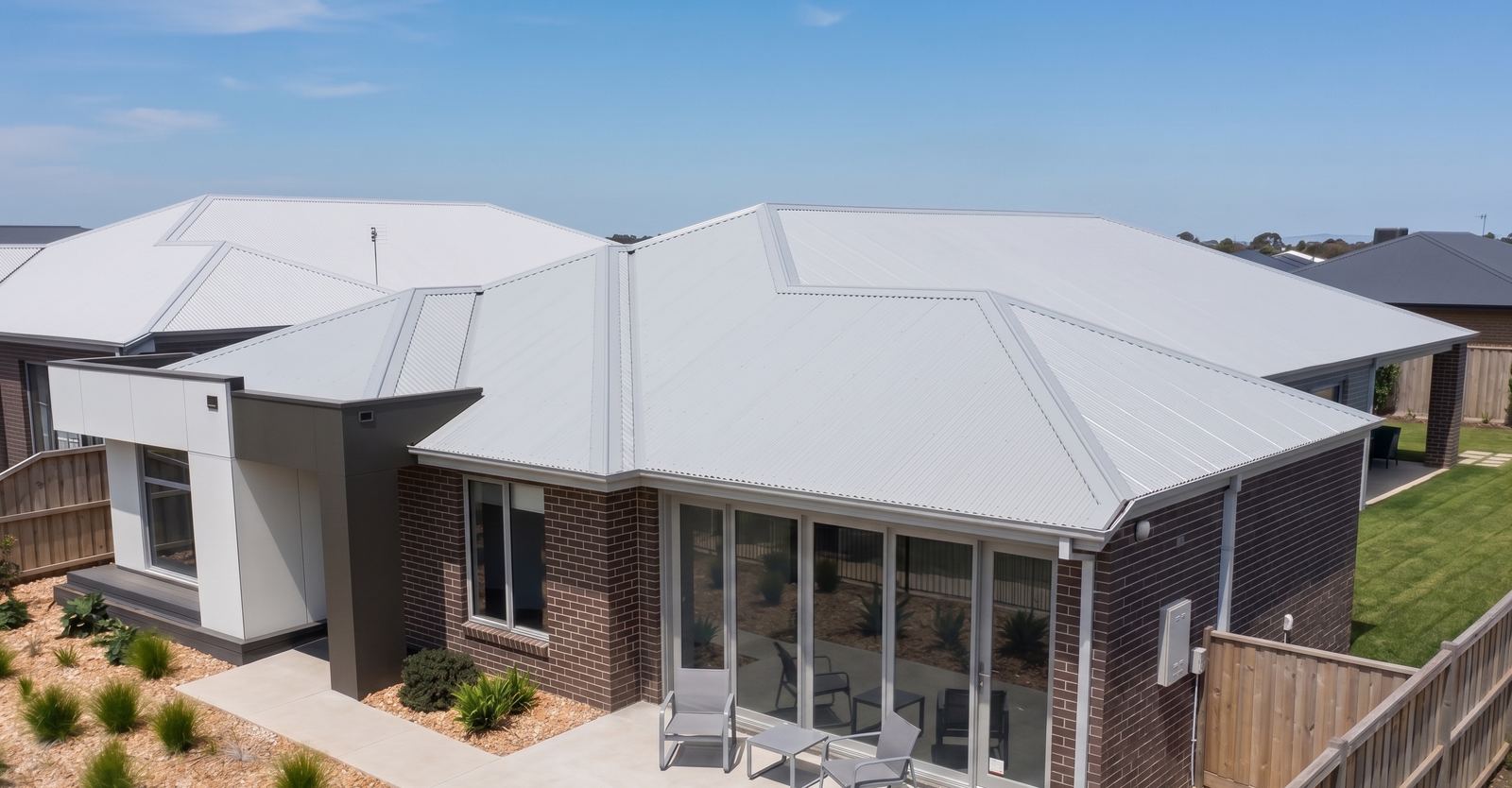
Find out which one your roof is.
Free inspection, photographs of every valley and ridge, and a written answer about whether you are looking at a repair or a replacement.
The phone is answered 24 hours, including weekends.